
EDM Machining
PartsMake supports Wire EDM, Sinker EDM, and Small-Hole EDM for complex features in hardened steel, tool steel, and other conductive metals.
The route is selected around conductivity, feature access, start holes, taper, spark gap, internal radius, electrode strategy, surface integrity, and related machining or grinding.
Material boundary: electrically conductive workpieces only
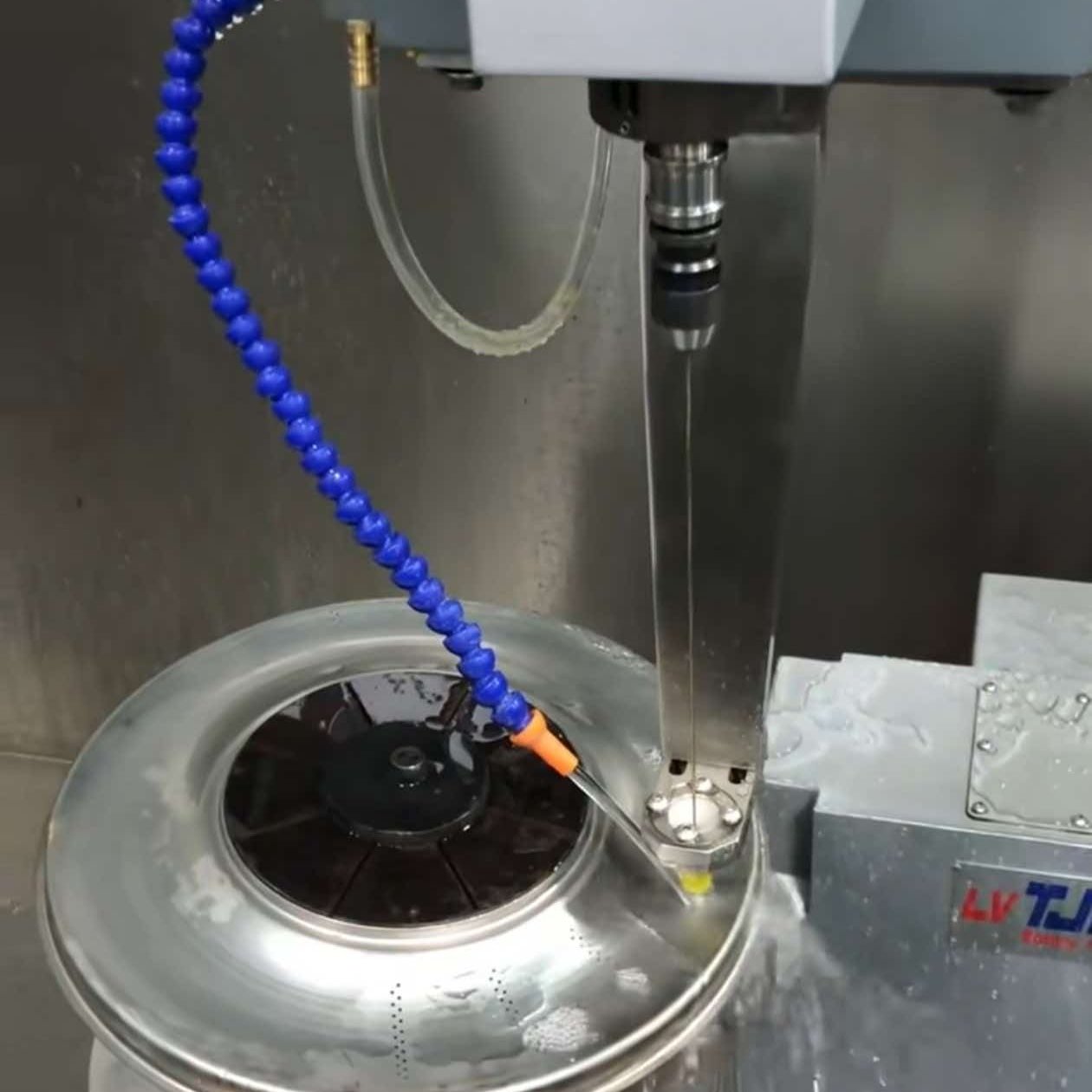
Electrical discharge machining
Choose Wire, Sinker, or Small-Hole EDM by feature access
EDM removes material with controlled electrical discharges. Its defining boundary is simple: the workpiece must be electrically conductive. Hardness is usually less limiting than conductivity, feature access, flushing, depth, electrode or wire path, and the required surface integrity.
Non-negotiable material boundary
EDM is only applicable to electrically conductive materials.
Hardened steel, tool steel, and other conductive metals are within the verified material scope. Plastics, glass, conventional ceramics, and other nonconductive materials cannot be cut by EDM unless a separate conductive condition is established and reviewed.
| EDM route | Choose it when | Feature access | Primary cost / risk driver | Typical production stage |
|---|---|---|---|---|
| Wire EDM | A precise through-profile, punch, die opening, slot, taper, or hardened contour must be cut without conventional cutting force. | The wire needs an edge entry or a start hole for a closed internal contour, plus a continuous path through the workpiece. | Part thickness, total cut length, number of skim passes, threading events, taper, flushing, and required finish. | Prototype through repeat tooling and production components where cycle time remains economical. |
| Sinker EDM | A blind cavity, deep pocket, rib, detailed internal form, or sharp-cornered feature cannot be reached effectively by a rotating tool. | A shaped electrode must approach the cavity and dielectric flushing must reach the discharge gap. | Electrode design, material, manufacture, wear, number of electrodes, burn depth, flushing, and surface requirement. | Tooling, molds, dies, and complex low-to-repeat quantities where geometry justifies electrode cost. |
| Small-Hole EDM | A small, deep conductive hole is needed, often as a wire start hole or for a difficult hardened feature. | The tubular electrode needs a direct approach and adequate flushing through the depth. | Diameter, depth-to-diameter ratio, breakthrough condition, electrode wear, flushing, and positional requirement. | Prototype, tooling, repair, and repeat components where drilling conventionally is impractical. |
Quantity is quote-specific.
The current company profile does not define one verified EDM quantity range. EDM can support prototypes, tooling, repair features, and repeat production, but economics depend on cut time, thickness, pass count, electrode cost and wear, unattended running potential, setup, inspection, and whether CNC machining or grinding is also required.
Wire EDM inputs that control feasibility
- Start hole or edge entry: identify how the wire reaches each closed contour and whether the start hole may remain.
- Taper: define angle, thickness, direction, top and bottom profiles, and where the size is inspected. Taper capability is geometry- and machine-dependent.
- Wire path and slug control: plan tabs, slug retention, fall direction, and protection of finished surfaces.
- Overcut / spark gap: the programmed path must compensate for wire diameter and discharge gap; this also affects achievable corners.
- Minimum internal radius: it cannot be zero and is limited by wire radius, overcut, material, thickness, flushing, and finish passes.
- Accuracy: verified Wire EDM capability is down to ±0.005 mm, subject to feature, thickness, setup, thermal stability, and inspection. A lower value previously shown on the page is not supported by the current company profile.
Sinker EDM electrode and cavity planning
- Electrode cost: complex cavities may need roughing and finishing electrodes, plus time to design, machine, inspect, and replace them.
- Electrode wear: sharp details, depth, material, power settings, and flushing influence dimensional change during the burn.
- Corner definition: electrode geometry and spark gap mean a perfectly sharp internal corner should not be assumed.
- Depth and flushing: deep narrow cavities can trap debris, slow the process, destabilize the discharge, and change finish.
- Access: the electrode, holder, and flushing strategy need a practical approach to the feature.
- Datum transfer: define how the cavity location relates to previously machined or ground features.
Surface integrity
Recast layer is separate from dimensional accuracy
EDM can leave a thermally affected recast layer and microstructural changes at the surface. Its depth and condition depend on material, discharge energy, roughing and skim or finish passes, flushing, and the final finishing route. A dimension can measure correctly while the surface condition is still unacceptable for fatigue, sealing, coating, or high-integrity tooling service.
Where surface integrity is critical, the RFQ should define permitted recast condition, roughness, crack prohibition, polishing or stock-removal needs, and the required inspection or metallurgical verification. These controls must be agreed per project rather than inferred from the dimensional tolerance.
When EDM is a strong fit
- Hardened conductive material would be difficult to cut conventionally.
- Wire-accessible profiles, narrow slots, die details, or complex through-contours need low cutting force.
- Blind cavities or deep internal forms justify a shaped sinker electrode.
- Small deep holes require a direct conductive-electrode process.
When EDM may not be the right process
- The material is nonconductive.
- A simple accessible feature can be milled, turned, drilled, or ground faster and more economically.
- Large-volume stock removal makes discharge time excessive.
- The required feature lacks wire, electrode, or flushing access.
- Surface-integrity requirements make recast removal or verification disproportionate to the feature value.
What to include with an EDM RFQ
Material stateExact conductive material, hardness, heat treatment, coating, and prior operations.
Geometry access3D CAD, drawing, start holes, open or blind condition, taper, depth, and permissible radii.
Critical controlsDatums, size, position, profile, finish, recast or edge requirements, and inspection method.
Production contextPrototype or repeat quantity, tooling ownership, electrode retention, target schedule, and related machining.
EDM machining articles
Explore EDM process guides
Browse focused articles covering EDM methods, applications, design considerations, and precision manufacturing requirements.
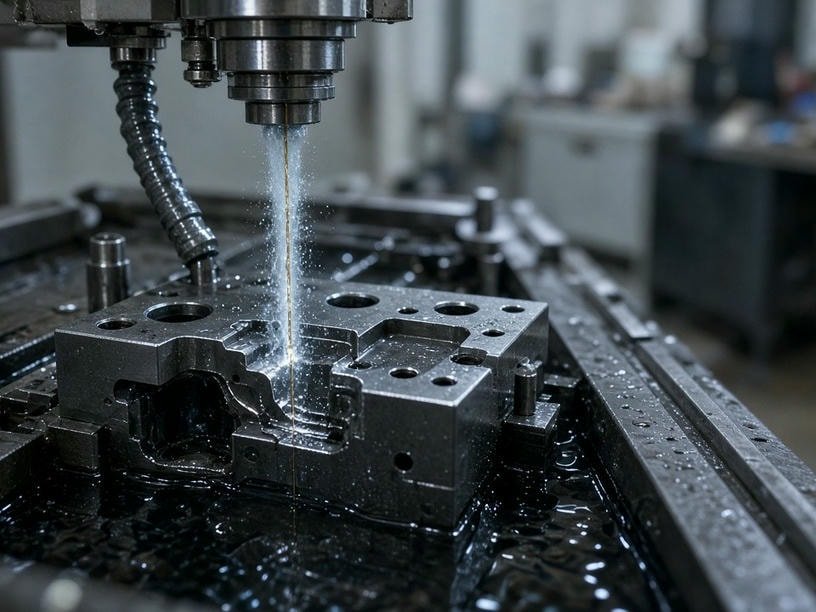
Precision Wire EDM Services for Hardened Materials and Complex Profiles
Get high-accuracy Wire EDM services from PartsMake. Achieve ±0.005mm tolerances on hardened steels and complex geometries. Request a quote today.
View details →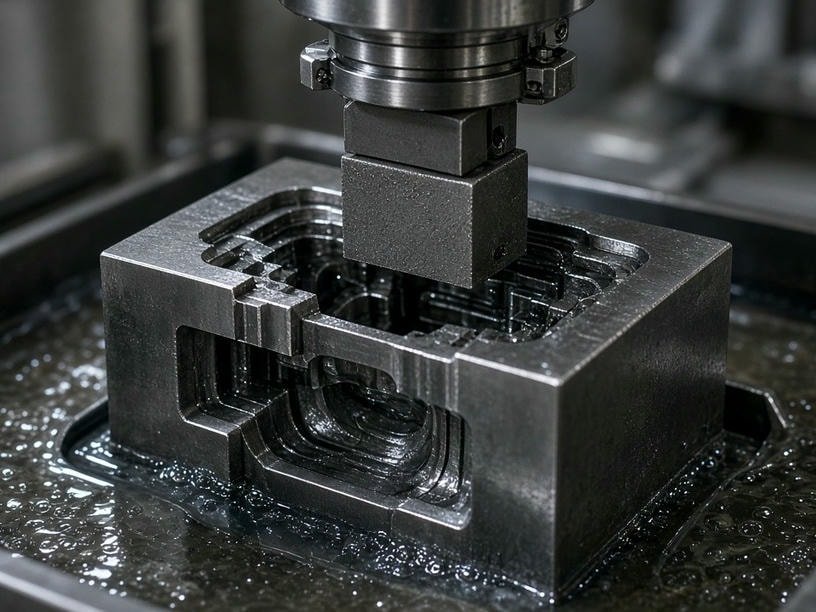
Sinker EDM Services | Precision Cavity Machining | PartsMake
PartsMake provides high-precision Sinker EDM services for complex cavities, sharp internal corners, and hardened tooling. Request a quote for your project today.
View details →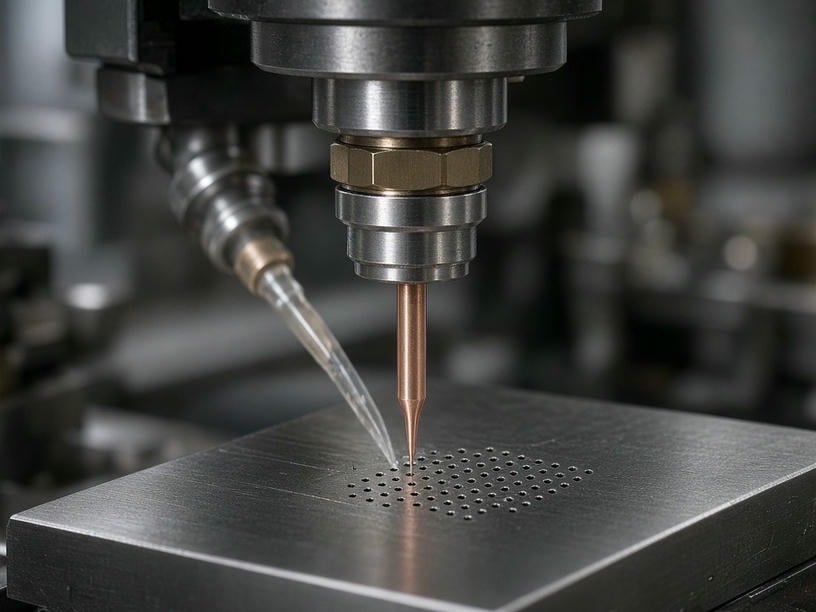
Small Hole EDM Services | Precision Deep Hole Machining | PartsMake
PartsMake provides precision small hole EDM services for hardened steels and superalloys. Achieve high-aspect-ratio holes with tight tolerances. Get a quote.
View details →Start your next project
Need EDM machining for a precision component?
Share your drawings, CAD files, material requirements, quantities, and target tolerances. PartsMake will review the project and help identify a practical manufacturing route.
Verified capability data
Verified EDM process limits
Process, size, tolerance, and material ranges follow the current PartsMake company profile.
| Parameter | Verified range |
|---|---|
| Wire EDM | Precision profile cutting |
| Maximum work size | Approximately 500 × 400 × 300 mm |
| Wire EDM tolerance | Down to ±0.005 mm |
| Sinker EDM | Cavities and complex internal geometry |
| Small-hole EDM | Fine and deep-hole machining |
| Typical materials | Hardened steel, tool steel, and electrically conductive metals |
EDM requires an electrically conductive workpiece. Final capability depends on feature depth, access, wire or electrode path, corner geometry, surface requirement, material condition, and inspection method.
Inquiry
Tell us about your EDM requirements
Provide the technical details available to you, and the engineering team can evaluate the best next step for your component.